


















Races like the Winter Spine Race, Arctic Spine Race and the Ice Ultra sit at the very edge of endurance sport. They aren’t just long ultras, they’re multi-day expeditions where cold, darkness, fatigue, and logistics can matter just as much as fitness.
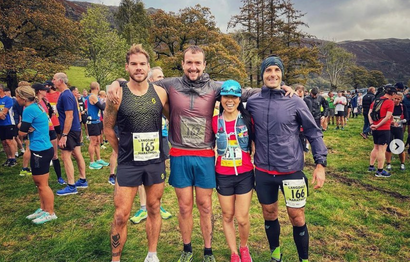
To understand what it really takes to succeed in events like these, we spoke to James Nobles, a seasoned Winter Spine athlete, Lauren Gregory, who is preparing to take on the Ice Ultra and Jon Shield who has taken on all three. While the races differ in terrain and format, the demands, and the lessons, overlap in powerful ways.
This is not about winning races. It’s about learning how to survive, adapt, and perform in the harshest environments endurance sport has to offer.
What makes the these races fundamentally different from other ultras in terms of difficulty and demands?
James Nobles – Winter Spine Race:

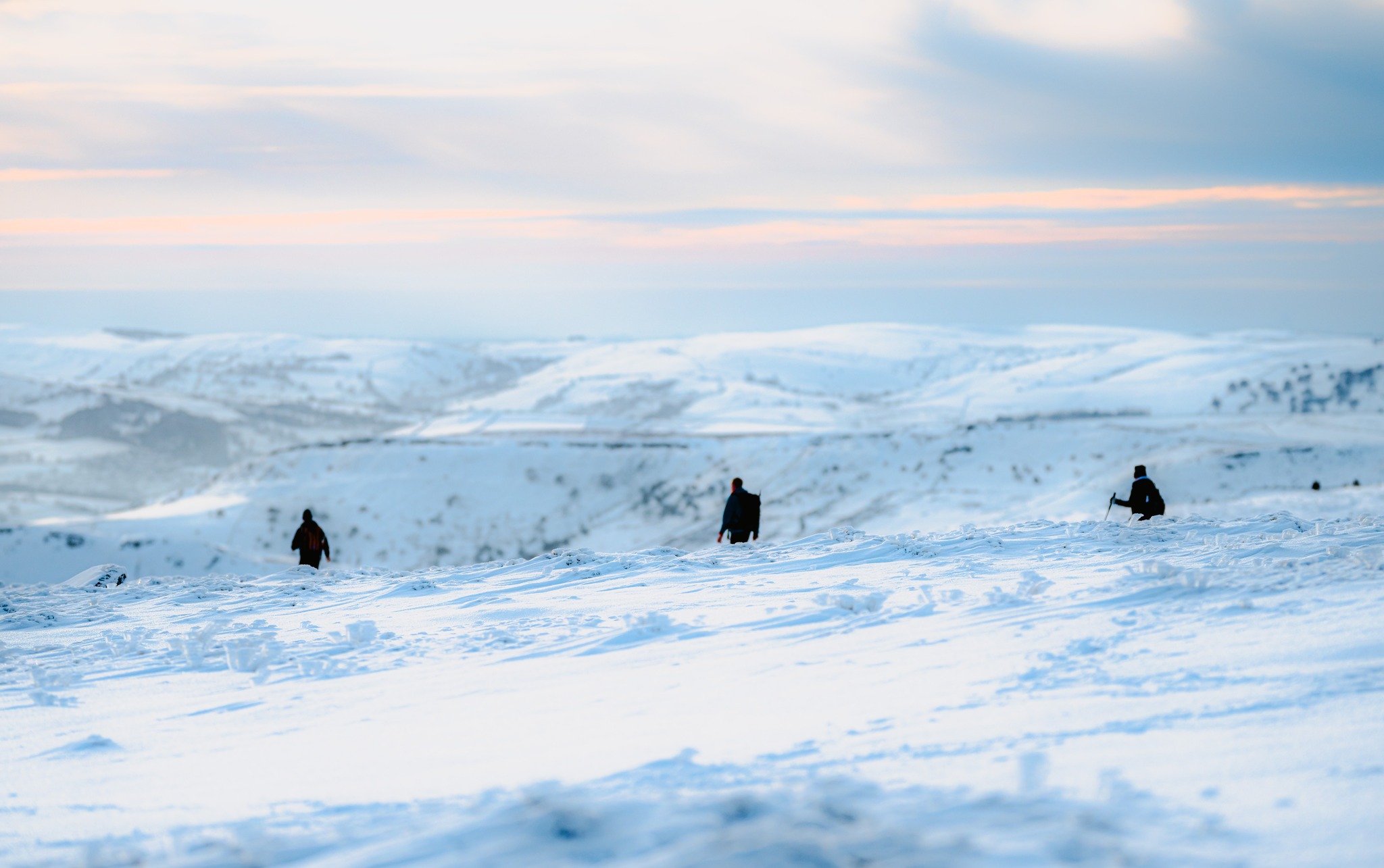
The Spine is a 270 mile race in the middle of the British winter, which always promises to bring some interesting weather with it. Last year for example we had knee deep snow (in places) and the year before we had -15 degree ambient temperatures!
This, in conjunction with the 16 hours of darkness, is what I think makes the Spine race different from all the rest. To give more scale to this, runners get one full week to finish, working our way from Edale in Yorkshire all the way up to Kirk Yetholm in the Scottish borders.
Lauren Gregory – Ice Ultra:

A major challenge is going to be to get clothing layers right so that I'm not exposed to the extreme cold conditions but also not overheat when I'm running. It's also easy to fall into the trap of not drinking enough fluid when you're cold, so I will be setting myself an alert on my watch to ensure that I stay hydrated.
Jon Shield - Spine Race and Arctic Spine Race

The Montane Winter Spine Race and Montane Arctic Spine Race are fundamentally different from other ultras in terms of difficulty and demands in several ways. Both have very few aid stations, spaced far apart. In the UK Spine race you have access to hot food and drinks along with your drop bag so there is an element of support even with checkpoints far apart compared to most ultras.
You also have access to areas to sleep. In the Arctic Spine race you have no support at the checkpoints other than a warm room to shelter whilst accessing your drop bag. You are free to make up your freeze-dried food whilst in this checkpoint with hot water supplied but that is the extent of help you get. If you want a sleep, you have to go outside and either bivvy or put your tent up and get in your sleeping bag. Temperatures can be as low as -40 degrees and 40mph winds were common on exposed lakes knocking you to the floor when your pulk catches the wind.
The two races themselves are very different but equally difficult for different reasons. The Winter race you have to be more of a runner and physically fitter if you want to be at the sharp end of the race.
In contrast running fitness is far less important with the Arctic race. You benefit from being proficient with arctic skills (utilising a stove for arctic conditions to melt snow for your drinking water and making food), Nordic skiing, being stronger and heavier to drag a pulk. The things the races both share is people who do well have resilience, can adapt and improvise to their surroundings and make sound decision making.
Both race courses are unmarked and you rely on GPX watches, handhelds, maps or a mixture of all of these.
What are the essential skills and experience someone should have before considering entering?

Photo credit: @nathanphua
James Nobles – Winter Spine Race:
Three key points for me:
Be prepared to move slow: Even at the front of the race, we’re only covering 3-4 miles per hour on average. Expect to do a lot of walking / hiking, and a little bit of shuffling here and there. Learn how to move efficiently, probably with the help of poles, and carrying a bag that weighs 6-10kgs.
Get used to the dark: You’ll spend most of this race looking at a small circle of light cast by your head torch 5-10 meters in front of you. You don’t have to do your training in the middle of the night, but make sure you spend a lot of time training under torch light and go find some unfamiliar terrain to navigate across.
Learn how to get yourself out of a psychological hole: Bad patches are inevitable in this race. Your mood will drop at times (to the point where you will want to quit), and this might last an hour or it might last several. Put on some music, eat some food, chat to another runner, or just get your head down and push through. It will pass. Never quit at a checkpoint.
Lauren Gregory – Ice Ultra:
Experience in multi day racing counts for a lot but not necessarily essential. Understanding the importance of fuelling on the go, maximising recovery time and also efficient race admin are all key elements to have a successful race.
Jon Shield - Spine Race and Arctic Spine Race
The essential skills and experience someone should have before entering these races is as follows. If you’re considering the Arctic Spine an arctic skills course is essential, things just work differently out there in terms of the fuel you use for your stoves, setting up tents, being able to Nordic ski etc.
The Spine organisers do a couple of these which is invaluable prior to undertaking these races. Experience is also used as vetting for this race, so the shorter Arctic races are often used as stepping stones to the full-length race to build in the required skills.
The Winter Spine race is easier in terms of you don’t have to cope with additional skills and dragging a pulk plus you get the element of support at checkpoints. Firstly, being consistent and dedicated with your training. If you want to take on huge challenges like this, they require some great commitment. That means spending some time preparing, checking kit, speaking with others who have completed the race, learning from mistakes they made (often they won’t have completed it first time so they have made mistakes they have learnt from).
It’s not just about being running fit. In some ways if you are too fit you can break down easier with injuries. It’s better to be slightly undercooked than overcooked. Regular specific strength training is key. It’s no good if you can run a 6 minute mile but then pull your hamstring slipping in the mud because you’ve neglected eccentric and isometric hamstring conditioning.
Take your time learning, success comes from failure. Mentally you have to be prepared for that. Ultra running has it’s ups and downs, you won’t always finish races, especially as the challenges you seek become harder – that’s why we do these types of events, if it was guaranteed it wouldn’t have the same appeal.
How should athletes prepare specifically for the winter conditions; cold, wind, snow, ice, and long hours of darkness?

James Nobles – Winter Spine Race:
Get out in it. This is always easier said than done. If you are laying in bed, listening to the howling wind and rain, and you know that you have a long run to do in it, running is the last thing you probably want to do. Small things like packing your kit the night before, setting multiple alarms, and not allowing yourself the opportunity to procrastinate will increase the chances of getting out. Every run in these types of conditions is one huge stepping stone on the way to the start line.
Lauren Gregory – Ice Ultra:
All of the above. Kit testing is essential as the environment won't allow for mistakes without severe consequences. Long back to back runs and double running days will certainly help to replicate race stimuli as well as exposure to cold - we can only hope for a cold January!
Jon Shield - Spine Race and Arctic Spine Race
When preparing for these wintery conditions – cold, wind, ice and long hours of darkness you need to make sure you have kit that will do the job. The Montane Spine races have very strict kit lists you must adhere to. It’s no coincidence that Montane is title sponsor of the race and renowned for their outstanding clothing and equipment. It can be lifesaving stuff and there’s a reason the UK race is known as ‘Britains Most Brutal’.
Getting used to your layering system with correct clothing is key, you don’t want to be too hot with too many layers and cause yourself to overly sweat making your clothing wet and you cold.
The phrase ‘become comfortable being uncomfortable’ is something I resonate with. You will get tired, you will get aches and pains, sore feet. This is a part of it. It is often where people find out ‘how much do you want it?’. The only way to prepare for this is by getting out in all weather, day or night trying to mimic the terrain as much as you can dependent on where you live.
Running/hiking with a headtorch is very different, it’s hard to get a sense of depth perception, your speed slows, you can’t see as far ahead so navigation becomes more difficult searching for a stile in a field, you’d otherwise have no problem seeing. I stress this needs to be done safely, checking weather reports, letting people know where you are going, the route you are taking, going out with other people and carrying the appropriate kit in case you did encounter a problem.
The Spine races are unforgiving and the weather extreme, but they have robust safety measures and teams in place for the duration of the race. When you are training you have none of this.
What does effective training for the Spine look like in the final 3–6 months, particularly regarding long days, back-to-back sessions, and pack weight?

Photo credit: Scarpa
James Nobles – Winter Spine Race:
From my perspective, the last six months has been broken into smaller blocks:
4–6 months out: Building a solid aerobic base and getting the legs used to Spine-like terrain. I was aiming for 70ish miles a week initially and moving up to about 80 by the end of that block. In an ideal world, I’d also be going to the gym a few times a week, but the reality was more like once a week.
2–3 months out: Increasing the volume, specificity, and gym work. I consistently hit 80ish miles per week here, with a lot of this on moorland terrain to emulate the type of terrain on the Pennine Way. Lots of back-to-back long runs at the weekend, often 20-25 miles on Saturday, and 15-20 on Sundays. Most of this was done in the early hours to balance with family life, so a lot of hours spent under torch light. Gym sessions twice a week consistently and core sessions 2-3 times a week.
6 weeks out: I always try to have a final 3 week “fine tune” in the run up to main events. For the Spine, this has included bigger mileage weeks (~100 miles), 3 gym sessions, and a fully loaded pack on all the long runs. When I get to this point, the runs are typically slower than they were 2-3 months ago, but I find I recover quicker and absorb the increased load well.
3 weeks out: Taper time. I focus on really letting my body recover from the training load, and so will reduce miles down to 30-40 per week, perhaps less in the final week. I’ll carry on with the gym work and lots of stretching / mobility work.
Lauren Gregory – Ice Ultra:
I tend to train 3 months in advance as I have a reasonably good base. The first two months are building up time on feet and also putting in some decent strength session, 2-3 times per week. In the final month ahead of taper, I will introduce my pack starting at 4kg and increase the weight every other run until I get to 9/10kg.
I will have three peak training weeks with long back-to-back runs and training with as much kit as possible. If we don't get any snow in January then I plan to head to the south coast to practice running on the sand with my snow shoes - no doubt I'll get some interesting looks!
Jon Shield - Spine Race and Arctic Spine Race
Training in the final few months before the Spine varies depending on my starting fitness. If you are very fit months out it’s usually not a great thing as it’s hard to hold fitness at a high level for a long period without picking up niggles. I tended to start relatively easily and increase my number of runs, duration of runs initially week on week with mostly easy running. I then tend to add in more specific terrain in the form of getting on the route or something similar back nearer home. I add in some Stairmaster with ankle weights and weight vest occasionally for increased climbing strength and if I cannot get on the hills or want less impact on the joints.
I listen to my body and if I feel overly fatigued, I will take a day off, I don’t follow a set plan – I listen to my body and it’s needs. My strength training is always incorporated a couple of times a week without fail throughout the lead up to a race. A lot of the spice (harder efforts) comes from when I’m out on runs and I feel good and feel like pushing, other times it’s on a treadmill, again now it’s all about how I feel.
Sometimes I have good intentions of intervals and I end up doing a steady run, other times I go in for an easy run and put some efforts in. It’s very much how the body feels at that point in time. I’ve moved away from back-to-back sessions, I run enough multiday self-sufficient stage races, I don’t find them personally beneficial now and with running at least 6 days a week there is that built in consistency in training anyway.
Another controversial topic – carrying pack weight. I might run with the Spine pack once or twice before the race purely to get a feel for how the pack sits, make any adjustments how the equipment is in the pack as to how it sits when on my back. If you train too much with a heavy pack you become a plodder. I also run on fells often so carry an amount of weight once a week with fluids, extra layers, waterproofs, nutrition etc. Combine this with regular strength work and it’s not needed.
What navigation and mountain skills are critical for staying safe and efficient?

James Nobles – Winter Spine Race:
There are definitely more difficult events on the navigation front. We don’t really have mountains to contend with in this race, and dependent on the race you’re in, there are usually well defined trods to follow. It would be very unlikely that we get the map and compass out, and rely much more so on the GPS watches in order to move as efficiently as possible. However, it’s incredibly important to know how to use your map and compass, or your alternative GPS device, if things go awry.
Lauren Gregory – Ice Ultra:
Stay alert! The race is marked and we've told that we will receive a GPX file nearer the time. When I was doing the Desert Ultra, I missed a flag on the first day as I was away with my thoughts which resulted in me going off course for about 1km. I quickly learned to stay more alert after that.
Jon Shield - Spine Race and Arctic Spine Race
Basic navigation is a useful skill to have. However, technology is that advanced now that electronic devices with GPX routes on them with crystal clear colour screens, incredible accuracy and battery life. They have evolved to such a great extent that a map and compass is often purely a backup safety feature if this equipment was to fail (the purists will hate me saying that). That said though it is important to be able to find yourself on a map and give a 6 figure grid reference and be able to follow a compass bearing if required.
What are your key principles for building a reliable gear system that works in sub-zero, wet, and unpredictable weather?

Photo credit: @nathanphua
James Nobles – Winter Spine Race:
This isn't a typical ultra. Most of the gear that I have is for mountaineering rather than running, and I have heavier duty gear in my drop bag too. Plan for the worst conditions, and the chances are that you will need to use this kit regardless. All you need to do is look at the finish line photos and you realise that most people have 2-3 jackets on, waterproof trousers, and several pairs underneath.
Lauren Gregory – Ice Ultra:
It's all very specialist gear and not exactly cheap. However the last thing I want is a kit failure when I'm in sub zero temps, therefore I've spent a lot of time researching every item and I've come to realise that it's worth spending the extra money on good quality kit. There's no room for error on this race so now is not the time to be scrimping.
Jon Shield - Spine Race and Arctic Spine Race
My key gear principles in building a reliable gear system to work in sub-zero, wet and unpredictable weather. A 3-layer jacket is the best form of protection from the elements and allows the body to sweat efficiently. Wind, rain, snow is all kept out as long as your jacket is kept in good repair.
A decent set of waterproof trousers is also essential. A warm hat that full covers your ears protects you from valuable heat loss and frostbite, as do quality finger gloves (for the arctic contact gloves are essential for performing dextrous tasks then a thick, warm, waterproof outer mitt which keeps fingers warmer than traditional finger gloves). A term regularly used is ‘be bold, start cold’. This avoids overheating in races. You want a close to skin layer such as merino wool which wicks moisture away from the skin to keep you warm. Add a mid-layer dependent on conditions. The same goes for leg wear or thermal running tights.
Socks are always personal preference and very individual to the runner, such as thicker socks for warmth, a liner sock and then an over sock or some prefer waterproof socks. More importantly is footwear choice. First and foremost, the shoe needs to fit with whatever sock configuration you decide, be comfortable and it has to be tried and tested on the specific terrain on long runs. The shoe itself should have some certain qualities. A shoe designed for winter is going to work well to keep your foot warmer than an extremely lightweight breathable shoes. They tend to have a thicker sole to stop the foot getting as cold and a more structured upper.
I avoid waterproof shoes because they tend to get water inside them at some point and then they become very heavy and the water can’t escape; this then causes problem with feet maceration if not addressed.
How should racers plan their fuelling strategy for a multi-day winter race where appetite, digestion and access to food are constantly challenged?

James Nobles – Winter Spine Race:
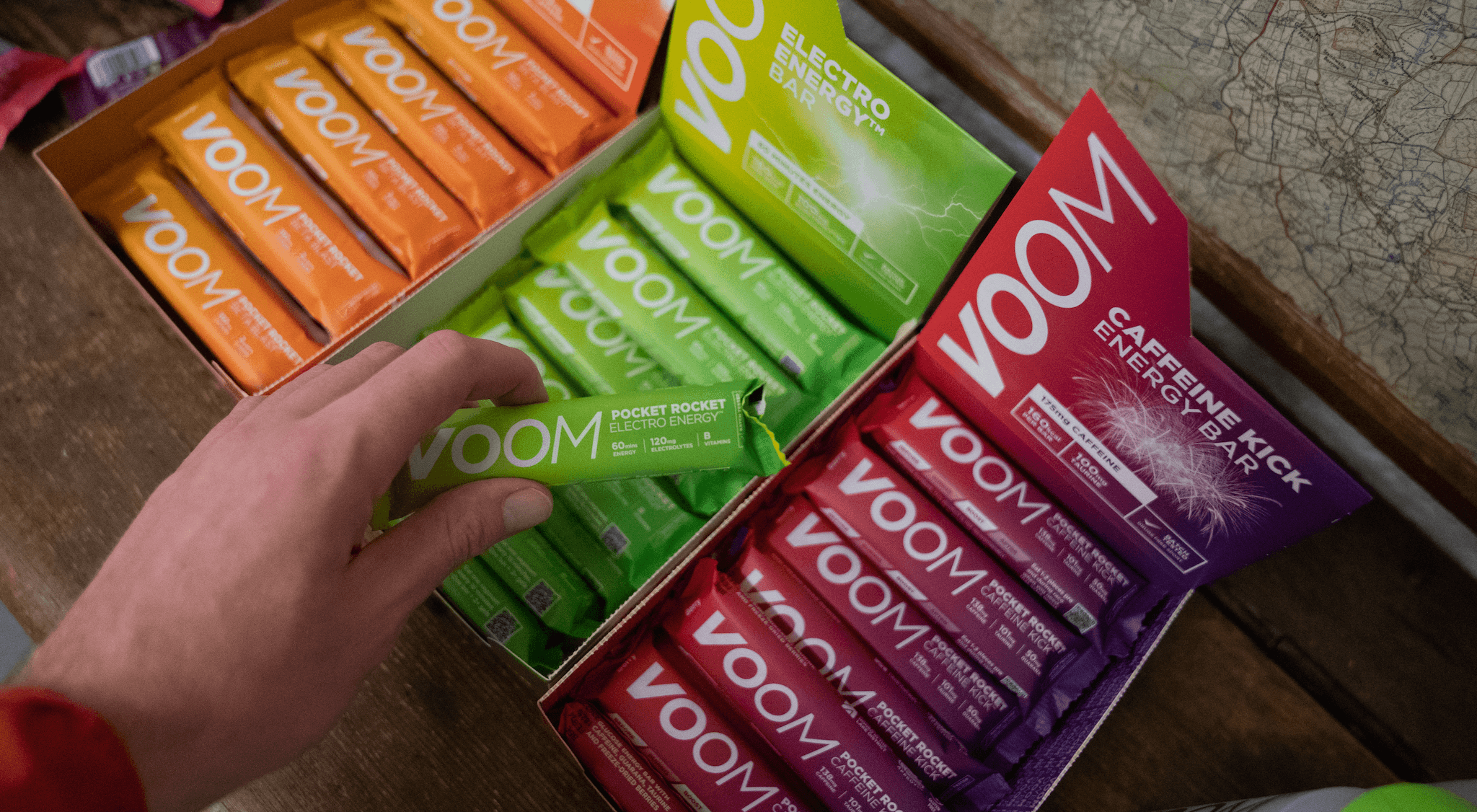
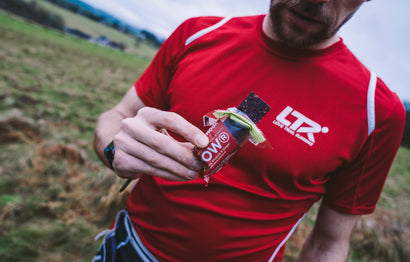
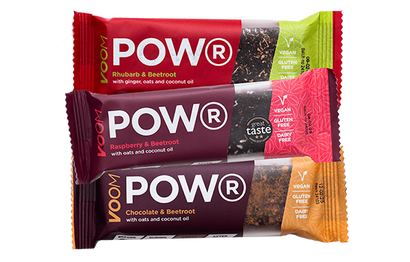
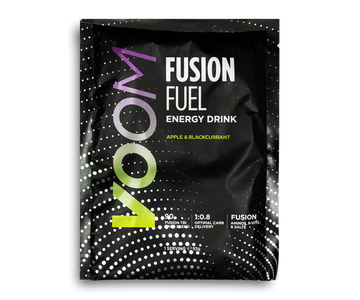
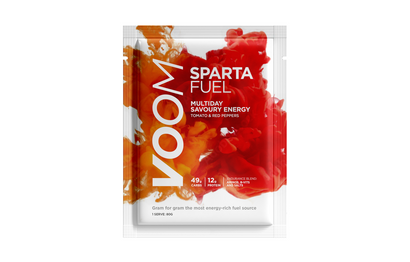
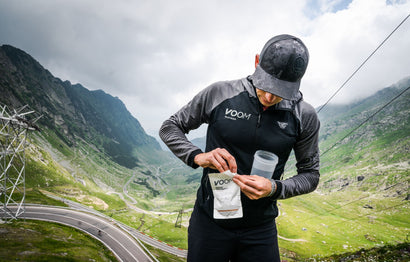
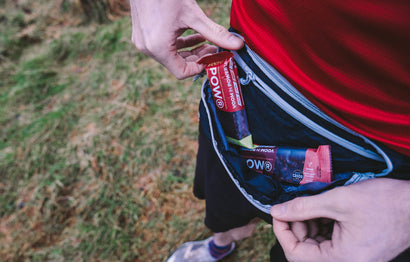
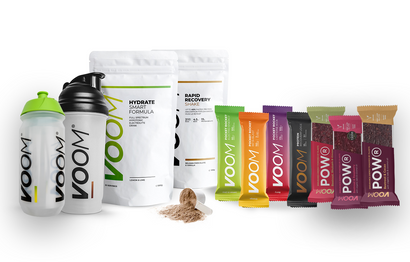
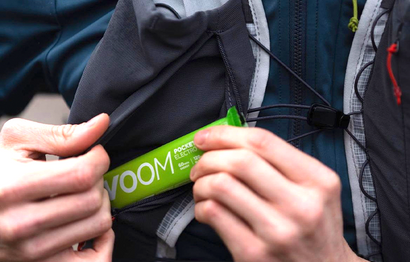
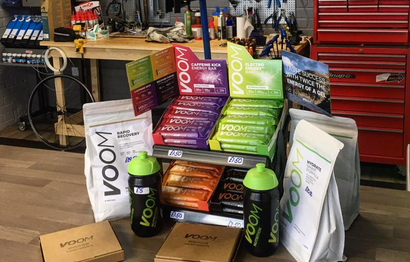
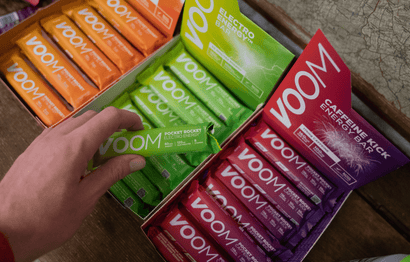
I’ve learnt the hard way here, and I still don’t think that I have got this “right”. Taste fatigue sets in quickly and so having a lot of variety is essential. Historically, I packed a lot of different foods (sandwiches, wraps, chocolate bars, VOOM bars, nut mix, flap jack, crisps), but I didn’t alternate this from checkpoint to checkpoint.
This year I plan to restock with different foods as I move up the Pennine Way, so that there’s a lot more variety. I’ll probably start off with more sweeter foods / carb drinks, and then transition on to different savoury foods further up. I aim to eat about 200-300 calories an hour.
Lauren Gregory – Ice Ultra:
This should definitely be tested during training, including the dehydrated meals as there will be no option to pop to the shop during the race. As with all self sufficient races, it's a balance between staying well fuelled but not carrying excessive weight and this is something I've obsessed over in previous races.
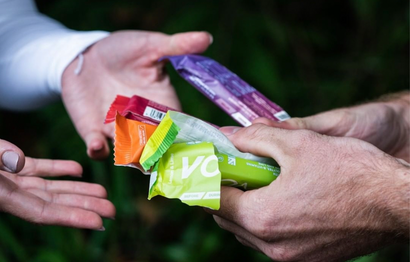
On this occasion, I've decided to accept the extra weight in my pack and make sure I have plenty of calories. Previously I have found that a mix of sweeter flavours such as VOOM Pocket Rockets and drinks, mixed with savoury or salty flavours such as salty nuts, biltong and crisps work well for me so I'll be sticking with that for this race.
Jon Shield - Spine Race and Arctic Spine Race
Fuelling is one of the most difficult things when planning a multiday race. Racers can expect to be in a calorie deficit after these events, the key is to offset this as much as possible by fuelling well prior to the start of the race and continuing to do this for the races entirety.
Often the problem is people experience pallet fatigue and stop consuming enough foods and fluids, they then don’t have the required energy to perform optimally. By having a combination of liquid fuel, solid food both sweet and savoury it can help prevent this. These things need to be practiced in training so it’s not a shock on race day. People may experience stomach issues during the race which is a common occurrence. If this happens it is usually beneficial to slow your pace, ease back on fuel consumption until this settles.
Like other muscles the gut can be trained to take greater amounts of carbohydrates as the preferred fuel source during high output activities. If you become slightly dehydrated it can have a negative impact on performance as the rate of carbohydrate absorption from the small intestine slows. During the Spine races you have to carry your nutrition between checkpoints until you can access your drop bag and resupply. This makes it more crucial that you carry a variety of things and enough to sustain you for that section of the race. Also bear in mind that a section of the race can vary by hours if heavy snowfall, ice etc so you may need to reconsider your requirements between sections and what you put in your drop bag if the weather changes or becomes more severe.
It is important to reset yourself at checkpoints. Having a warm meal and warm drinks makes sure you are getting a good balance of calories from carbohydrates, fats and protein. It is a rare opportunity to get a warm meal and plenty of calories before many hours using just what you carry.
What are some practical ways to keep food, water, and essential kit accessible and usable when everything is freezing?

James Nobles – Winter Spine Race:
Stopping water from freezing whilst aiming to keep your pack light is a real challenge. Blowing into your bottles regularly can mitigate against this, but it only works for so long! Food is easier to manage though - plan to take foods that either don't freeze / not greatly affected. Put food inside your coat or inside your gloves if you need them to thaw out before eating 😊
Lauren Gregory – Ice Ultra:
Bottles will be insulated and the water is served hot at aid stations to minimise the risk of freezing. I have been advised to test any snacks in the freezer to see how they react in those temperatures - I'm yet to do this!
Jon Shield - Spine Race and Arctic Spine Race
Practical ways to keep food, water and essential kit accessible and usable when everything is freezing. In the arctic, temperatures are cold enough to freeze fluids in soft flask, thermos etc. There are ways to try and minimise disruption. If using soft flasks, keeping the bottle next to your body in an internal pocket away from the elements can help.
Using hot water prefilled also buys time and can be useful as a hot water bottle (use with caution and not boiling, you don’t want a burn). Drinking regularly from the soft flask and then blowing excess water back through the bite valve also stops the freezing. Having liquid nutrition also alters the freezing temp of the liquid.
If using other bottles, wider drinking openings reduce freezing, Nalgene bottles for example. Thermos also have flasks designed for extreme temperatures. Filling these with boiling water at the start of the race and at checkpoints allows you to mix drinks or rehydrate the freeze-dried food. Thermos also have a weatherproof neoprene sleeve you can place the thermos in to keep it warmer for longer.
Shortbread is a common food used in extreme cold as it does not freeze. Keeping other food that might go hard is possible again with pockets close to your core that give off enough heat to stop them freezing.
What elements of pacing, rest, and self-care are crucial for maintaining performance and avoiding fatigue or cold-related issues over such a long event?

James Nobles – Winter Spine Race:
This will vary massively from person to person. Towards the front of the race, it can be very easy to get swept up in the moment, and run quicker than you ever planned to do.
However in order to try and win one of these events, you’ve got to roll the dice and adapt as you go. I made a conscious decision in 2023 to slow down going into Hebden Hey, and left that check point on my own and setting my own pace.
By the time we reached Hawes, the top 5 had all changed. Some dropped out, others fell back, some pushed on. Listen to your body carefully and go solo if you need to. Self-care cannot be overstated enough - manage issues as soon as they start, don’t let a pebble in your shoe cause a completely avoidable blister. The Spine saying, “be bothered” is very apt!
Lauren Gregory – Ice Ultra:
I believe a good self care routine, balanced with efficient race admin is key to races like this. In terms of pacing, I plan to be competitive but not go crazy ahead of the long stage, therefore I hope to have a few hours of 'down time' after each stage where I will stretch, eat, do my admin for the next day and hopefully get some good restorative sleep which is always a challenge in races like this where you're sharing with others.
Jon Shield - Spine Race and Arctic Spine Race
Self care Is crucial during the Montane Spine Race. Your feet are so important in this race. Due to the long time on your feet, exposure to prolonged wet feet can cause maceration and trench foot. Looking after your feet is key to a successful race. The longer they are in good condition the faster you will move. Changing socks at every checkpoint is good practice.
Bacteria can build up potentially contributing to blisters and infection so removing them, giving your feet a good clean and then allowing them to dry whilst eating food and doing other admin is a good idea before putting a clean pair of socks on. If you find yourself with foot issues you will end up stopping more frequently, exposing bare feet to the elements with limited shelter on the course which in turn loses your body’s heat when stood or sat still. It is important to keep moving wherever possible to maintain body heat.
If you do find yourself stopping, then you need to use your layers. A steady pace is preferable, go off too quickly and you burn your matches and your pace will drop off a cliff, too slow you might get cold and you don’t get as far as you could before fatigue and sleep requirement kicks in. There is an optimal pace which moves you along the course so that when you need a sleep/power nap you are in the best place. Think of it like this… whether you are exercising or not you can only stay awake for so long before your body says you need a sleep. You want to be as far as possible before this happens.
Everyone is different when it comes to sleep but short power naps are common when going past the 100 mile point. Often 10-20 min naps are enough to help rejuvenate the body to an extent. Getting additional sleep prior to the race is a good strategy. Consumption of caffeine can help during the night when the body is more likely to want sleep. Adding in a power nap just before sunrise can help with the body’s natural circadian rhythm.
Location of your naps is also a consideration. I often nap when I need it on the trail. Sometimes this wouldn’t be safe though and should be considered. Checkpoints often offer the ability to get some sleep in relative comfort, but I often find this causes you to take a lot more time with added faff, and the inviting warmth, conversation of others, warm drinks etc. It makes it harder to get up and get moving again.
What, in your view, makes it so special, and why do athletes keep coming back despite (or because of) its brutality?

James Nobles – Winter Spine Race:
This race has a true sense of adventure. The outcome, for everyone, is never certain. The weather, the underfoot conditions, the self-care, the food all play a huge part in this race. Being “fit” is just one small part of this puzzle. I think the number of factors in this equation, controllable and uncontrollable, is what brings people to this race. That, and the top notch checkpoints all the way up to Kirk Yetholm!
Jon Shield - Spine Race and Arctic Spine Race
The Montane Spine Race is a magical event. It’s not just the event it’s the build up in the weeks before it starts, seeing who is on the start list of each race. Everyone starts talking about the potential battles, who’s in form, who’s done what throughout the year. Then once it starts the footage that is captured, the story that unfolds in the updates, the dot watching. It all builds incredible atmosphere.
Combine that with the superhuman performances by people, the spirit and community that is built around this race with the runners, with the amazing volunteers and the support out on course is just incredible. I can’t speak for everyone why people keep coming back, perhaps the challenge and accountability.
For me I still feel I am yet to have the race I know I can have. I know I can suffer, yes it is a challenge but it goes beyond that. I want that performance where things click – what every athlete wants, I think! This year is particularly interesting as the North Sprint is the only race distance I haven’t completed in the UK Spine Races and I’ve also completed the Full Arctic Spine. No one else will have done that. It feels like I will then have to try and improve on some of the distances. On top of that though there is always the FOMO and the unique vibe the race brings every January.